 Save
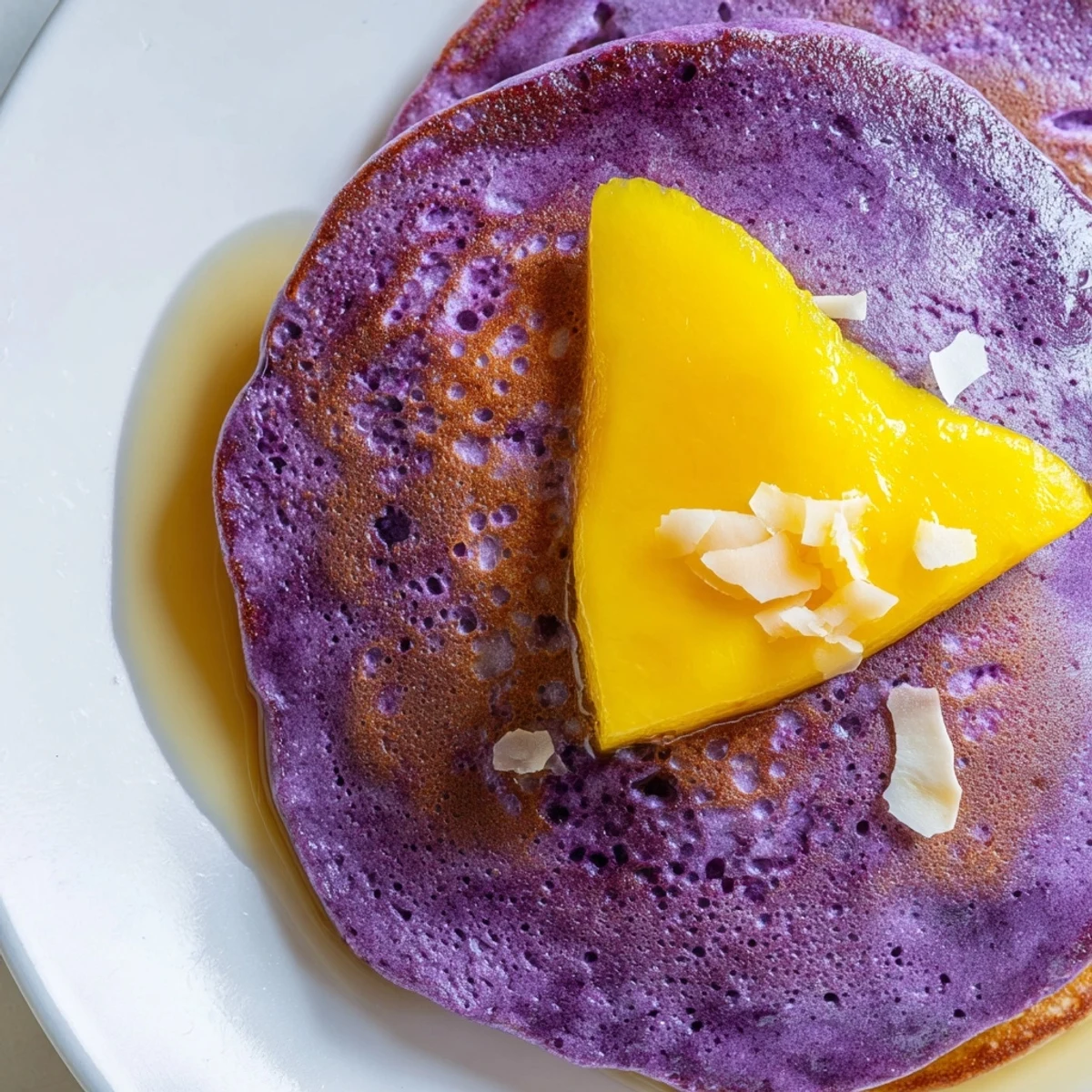
Save These vibrant purple pancakes combine the nutty, vanilla-like sweetness of Filipino ube with the delightfully chewy texture of Japanese mochi. Made with sweet rice flour and ube halaya, they offer a unique fusion experience that's both familiar and exotic. The batter yields thick, fluffy pancakes with a satisfying bounce and rich flavor profile.
Ready in just 35 minutes, these naturally gluten-free treats are perfect for weekend breakfasts or special brunch occasions. The striking purple color makes them visually stunning, while the balance of sweet ube and subtle vanilla creates a sophisticated yet approachable flavor.
I'll never forget the first time purple pancakes appeared on my breakfast table. My aunt had just returned from Manila with a jar of ube halaya, insisting it would change everything about our weekend pancake tradition. She was right, naturally. The smell alone is worth getting out of bed for.
Last summer, I made these for a brunch party and watched my friends' faces light up when they saw the stack of violet pancakes. Someone actually asked if I'd used food coloring. I happily spent the next hour explaining the wonder that is ube.
Ingredients
- Sweet rice flour (mochiko): This is the secret behind that signature chewy texture. Regular flour just won't give you the same bounce.
- All-purpose flour: Just a touch helps structure, but skip it if you need gluten-free and use more mochiko instead.
- Ube halaya: Find this at Asian markets, it's the concentrated purple yam jam that does all the heavy lifting for flavor.
- Whole milk: The richness balances the earthy ube perfectly, though coconut milk works beautifully too.
- Baking powder: Don't skip this, these pancakes need the lift since the rice flour is heavier than wheat.
Instructions
- Mix the dry foundation:
- Whisk together the mochiko, flour, sugar, baking powder, and salt until everything's evenly distributed.
- Blend the purple magic:
- Combine the milk, ube halaya, eggs, melted butter, and vanilla until the mixture turns a gorgeous violet and feels smooth.
- Bring them together:
- Pour the wet ingredients into the dry and fold until just combined, the batter will be thicker than you expect.
- Heat your pan:
- Get your skillet to medium-low with a little butter, you want gentle heat so the inside cooks before the outside burns.
- Cook with patience:
- Scoop about 1/4 cup per pancake, spread gently, and wait for bubbles before flipping, about 2-3 minutes per side.
 Save
Save My daughter now requests these for every birthday breakfast instead of cake. There's something about the color that makes the morning feel special, even on a random Tuesday.
Making Them Your Own
I've discovered that adding ube extract kicks both the color and flavor up several notches. Just half a teaspoon makes the purple deeper and more vibrant. If you can't find ube halaya, purple yam powder works in a pinch with some extra sugar.
Perfect Pancake Technique
The secret is patience, these pancakes cook slower than you're used to. Wait until the bubbles look dry around the edges before you even think about flipping. They'll feel jiggly when you first pour them, that's the mochi magic working.
Serving Ideas
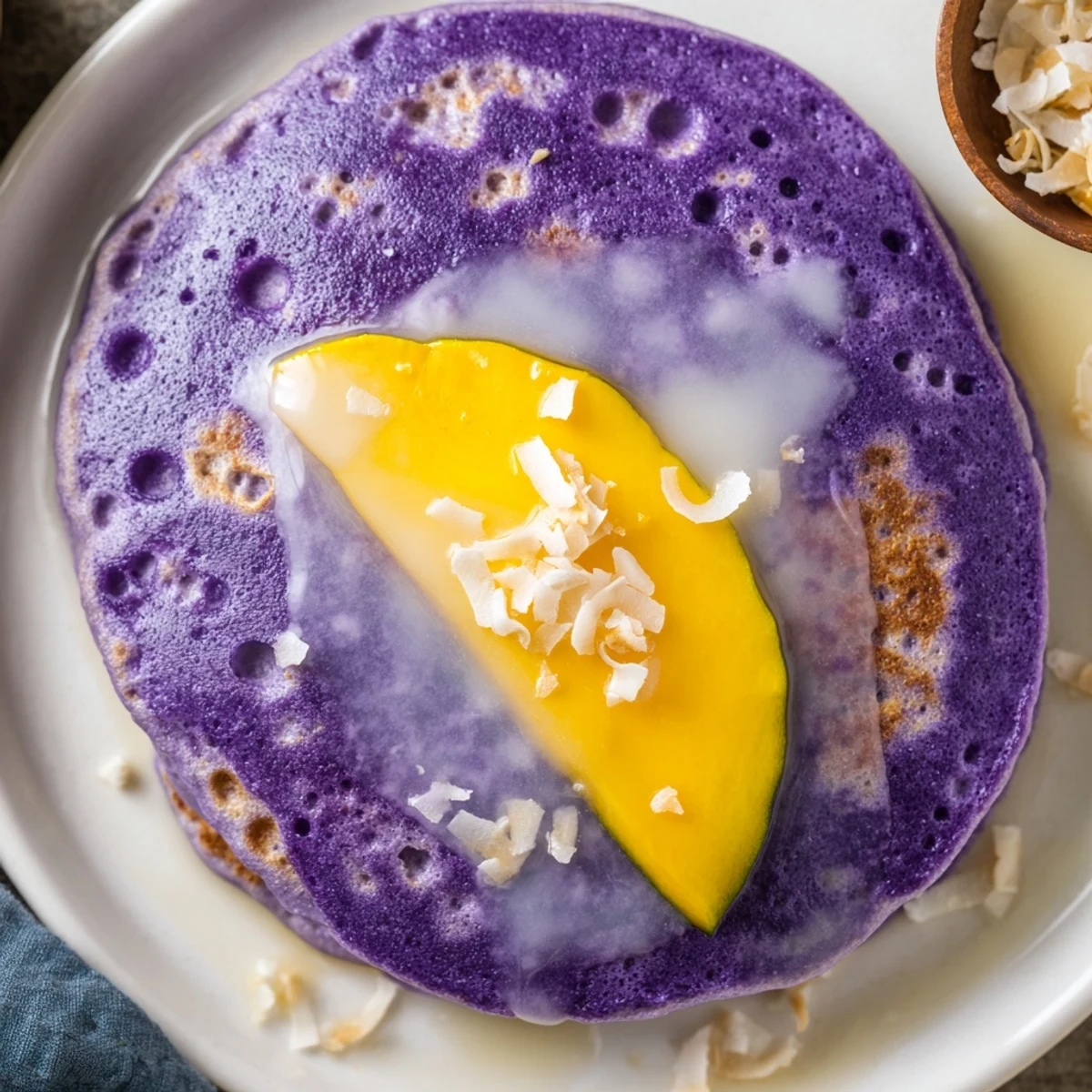
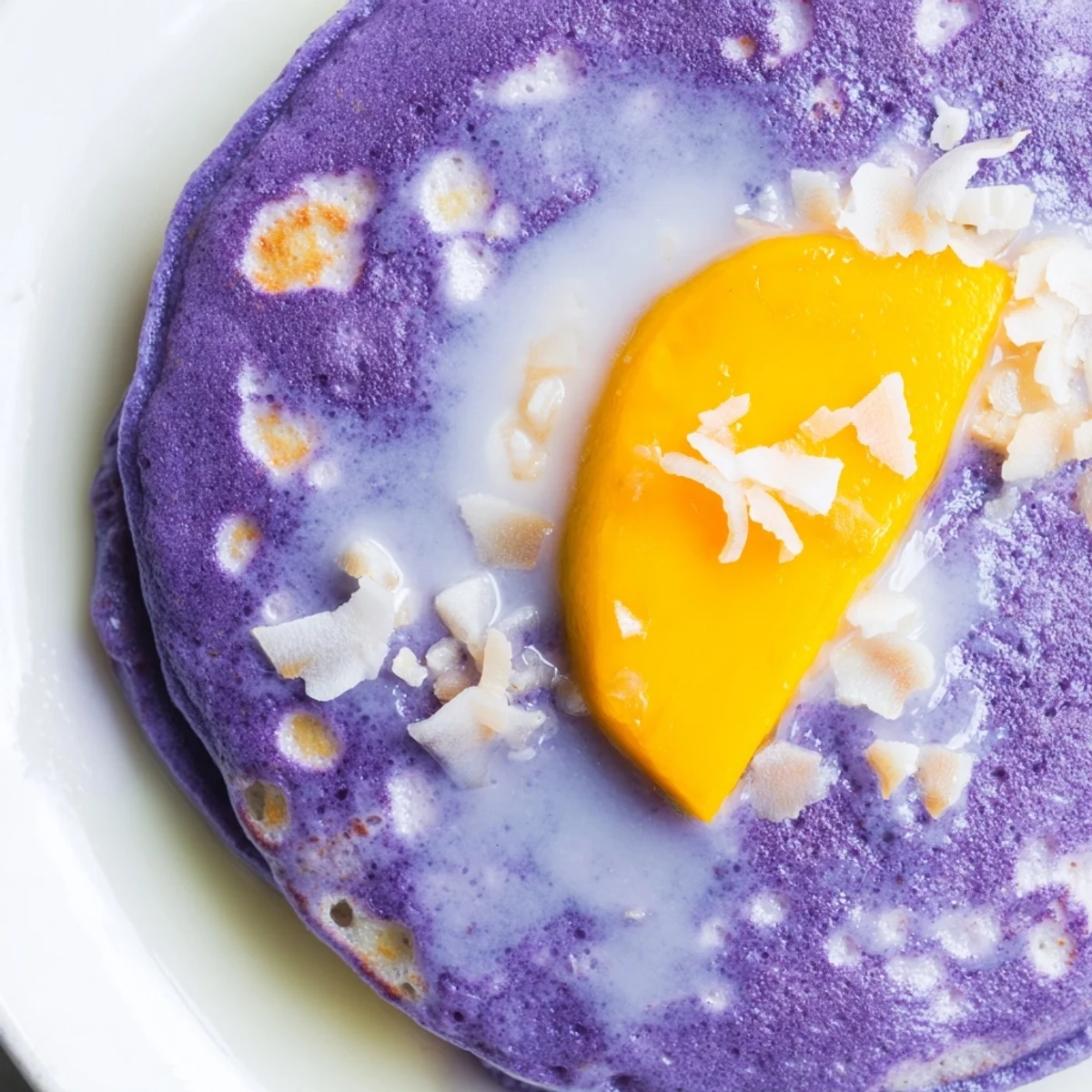
Sweetened condensed milk drizzled over warm pancakes creates the most incredible flavor combination. The milky sweetness pairs perfectly with the nutty ube. I also love fresh mango slices when they're in season.
- Toast coconut flakes until golden for crunch contrast
- Try coconut milk instead of regular milk for tropical vibes
- Leftovers reheat beautifully in a toaster
 Save
Save Something about these purple pancakes makes even the hardest morning feel a little more magical. Hope they bring some joy to your breakfast table too.
Recipe FAQs
- → What makes these pancakes chewy?
-
The chewy texture comes from sweet rice flour (mochiko), a glutinous rice flour that creates the signature mochi-like bounce. Unlike regular pancakes, these maintain a pleasantly dense, elastic consistency that's satisfying to bite into.
- → Where can I find ube halaya?
-
Ube halaya, or ube jam, is available at Asian grocery stores, Filipino markets, or online retailers. Look for it in the international aisle or specialty section. Some well-stocked supermarkets may also carry it in their Asian foods section.
- → Can I make these completely gluten-free?
-
Yes! Simply substitute the all-purpose flour with additional sweet rice flour (mochiko). The pancakes will turn out just as delicious and maintain their signature chewy texture without any gluten-containing ingredients.
- → Why is my batter so thick?
-
The thick batter is intentional and necessary for achieving the proper mochi texture. Sweet rice flour absorbs more liquid than wheat flour, creating a dense, sticky consistency. Don't thin it out, or you'll lose the characteristic chewiness.
- → What toppings work best with ube mochi pancakes?
-
Sweetened condensed milk enhances the ube flavor beautifully, while fresh mango adds a tropical contrast. Toasted coconut flakes amplify the Filipino-inspired profile, and maple syrup provides classic pancake sweetness. Fresh berries also complement the purple hue.
- → Can I freeze leftover pancakes?
-
Yes, place cooled pancakes in a single layer on a baking sheet to freeze individually, then transfer to a freezer bag. Reheat in a toaster or warm skillet to restore some of the original chewy texture, though they're best enjoyed fresh.