
 Save
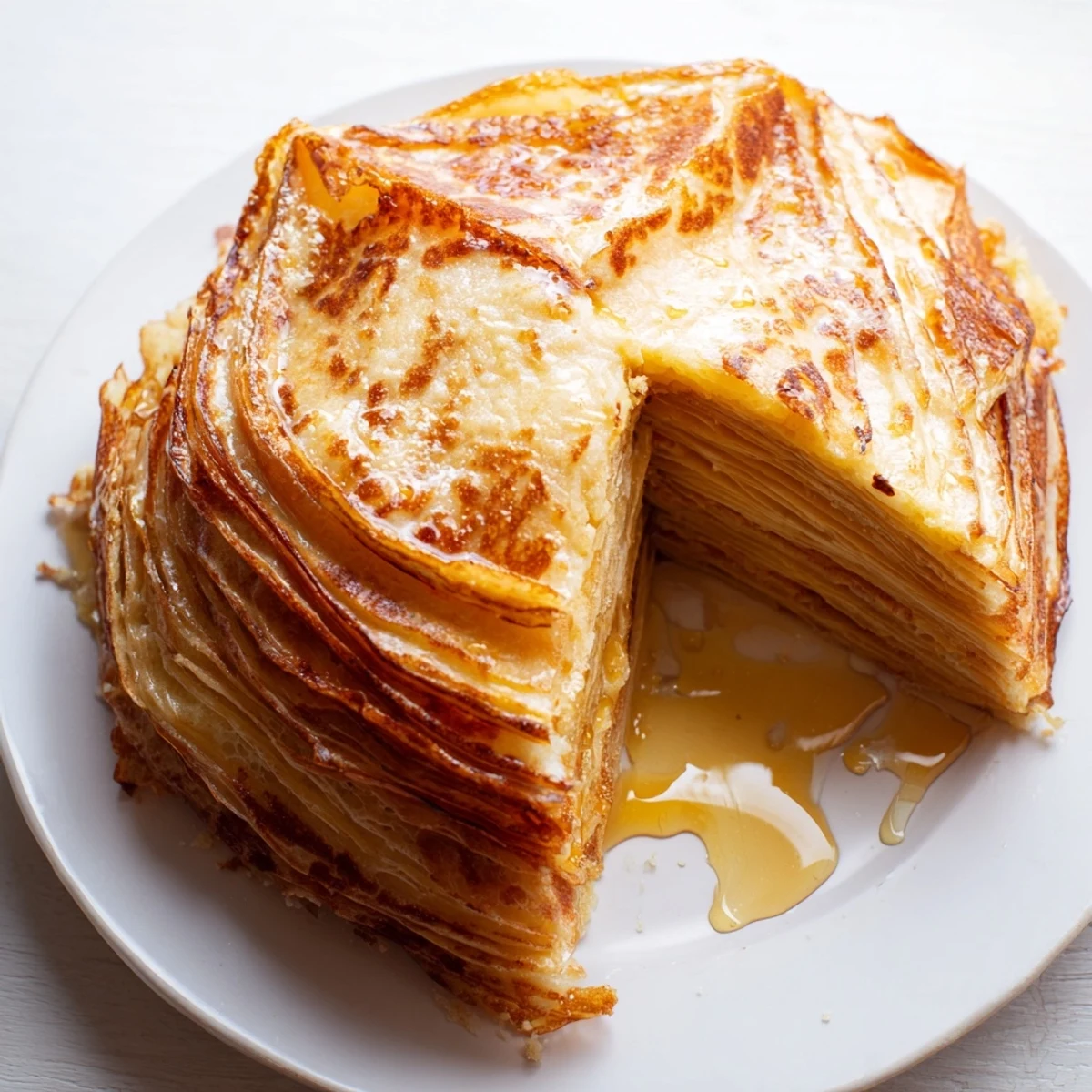
Save Meloui represents Morocco's beloved answer to flaky pancakes, featuring hundreds of paper-thin layers created through a unique folding technique. These round, golden disks boast a satisfying crunch on the outside while remaining tender and buttery within. The dough combines flour and fine semolina, then gets stretched tissue-thin, dotted with butter, and folded multiple times before being cooked on a griddle until spotted with brown.
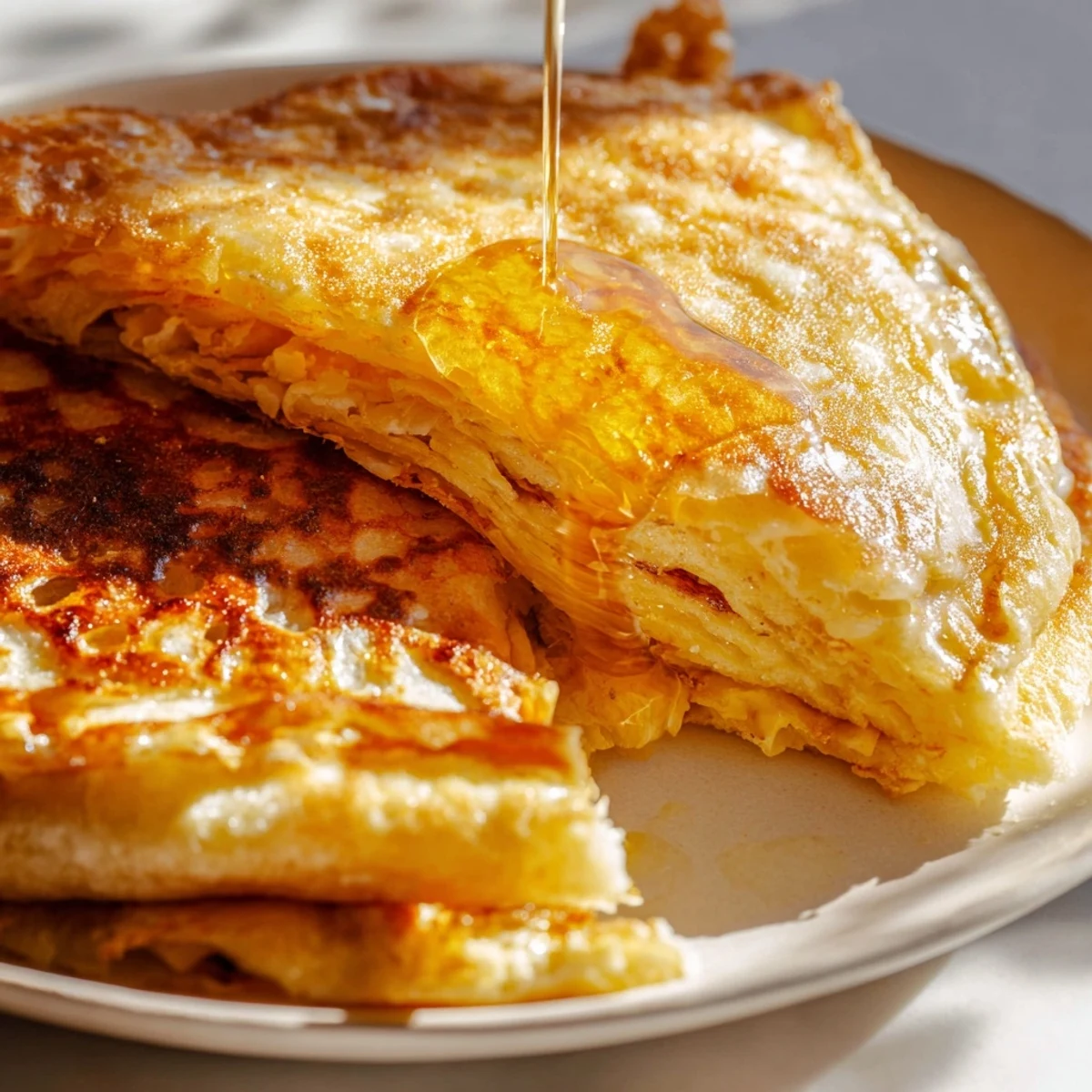
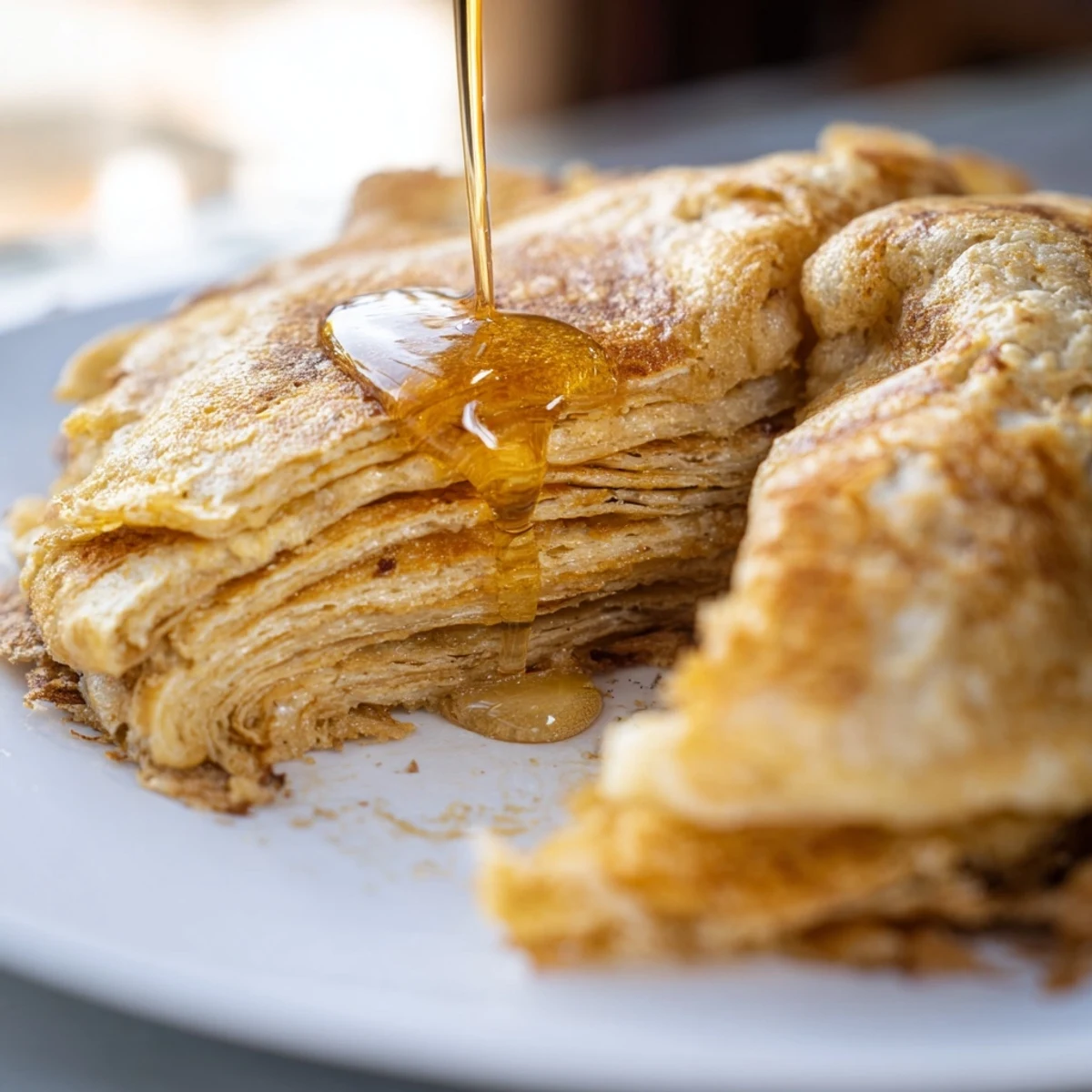
Serving Meloui warm transforms breakfast into something special—the layers pull apart beautifully, revealing steamy, buttery interiors that soak up honey and jam like nothing else. While they require patience to master the stretching technique, the result delivers an incredibly authentic taste of Moroccan culinary tradition. Store extras and reheat quickly for those busy weekday mornings.
The aroma of semolina and butter hitting a hot skillet transported me straight back to my friend Nadia's kitchen in Casablanca. She stood over the stove, her hands moving with the practiced ease of someone who has folded these pancakes a thousand times, laughing as I tried to mimic her impossibly thin dough stretching technique. That afternoon changed everything I thought I knew about breakfast breads, something between a croissant and a pancake that defies easy categorization.
Last winter, I made a batch during a snowstorm when friends were stranded at my house unexpectedly. Something magical happens when you serve these warm, drizzled with honey, as steam rises and carries that semolina sweetness through the room, suddenly making everyone forget about being stuck indoors.
Ingredients
- 3 cups all-purpose flour: The foundation that gives structure while allowing those delicate layers to separate during cooking
- 1 cup fine semolina: This is the secret ingredient that creates Meloui's signature texture and subtle nutty flavor
- 1 ½ teaspoons salt: Essential for balancing the sweetness you'll add later and enhancing the semolina's natural flavor
- 1 teaspoon sugar: Just enough to help the dough brown beautifully without making it sweet
- 1 ½ cups warm water: Warm water helps the gluten develop faster and creates a more pliable dough that stretches without tearing
- ½ cup vegetable oil: Keeps your hands and work surface slippery enough to achieve those paper-thin circles
- ¼ cup softened unsalted butter: Creates the flaky layers between dough folds and adds that rich, satisfying finish
- ¼ cup fine semolina for dusting: Adds extra texture and helps prevent folded layers from sticking together
Instructions
- Mix the dough base:
- Combine flour, semolina, salt, and sugar in a large bowl, then gradually incorporate warm water while mixing until you have a soft, smooth dough that holds together well.
- Knead until elastic:
- Work the dough for 8 to 10 minutes, feeling it transform from sticky and shaggy to smooth, elastic, and slightly tacky but not clinging to your hands.
- Portion and rest:
- Divide the dough into 8 equal balls, cover them with a damp cloth, and let them relax for 15 minutes so they'll be easier to stretch later.
- Stretch into paper-thin circles:
- Lightly oil your hands and work surface, then gently press and pull one dough ball into a nearly transparent circle about 10 inches across, working from the center outward with confident, steady pressure.
- Add the layering ingredients:
- Dot the stretched dough with softened butter and sprinkle semolina generously across the surface, treating it like you're seasoning a steak rather than measuring precisely.
- Fold into layers:
- Fold the circle into thirds like a letter, then fold again to create a square or rectangle, sealing in all that buttery goodness, and repeat with remaining dough balls.
- Rest the folded pieces:
- Let all the folded squares rest for 5 minutes so the gluten relaxes slightly, making them easier to flatten without tearing.
- Flatten for cooking:
- Gently press each folded square to about ½ inch thickness, being careful not to squeeze out all the butter and semolina you just folded inside.
- Cook to golden perfection:
- Heat a skillet over medium heat, lightly oil it, then cook each pancake for 2 to 3 minutes per side, pressing gently with a spatula until both sides are golden brown and the layers have started to separate.
 Save
Save My daughter now requests these for sleepover breakfasts, and watching her friends try Meloui for the first time, eyes widening at the flaky texture, reminds me why some recipes become more than just food, they become memories.
Mastering the Stretch
The stretching technique takes practice, and your first few attempts might end up with holes or uneven thickness. Work on a lightly oiled surface rather than floured one, and use the heel of your hand to push from the center while your fingers guide the edges outward.
Temperature Control Matters
Too high heat burns the outside before the inside cooks through, while too low heat makes them greasy and heavy. Medium heat allows the butter between layers to melt and steam, creating those flaky layers instead of just saturating the dough.
Serving Suggestions
While honey and butter are traditional, these pancakes pair beautifully with savory toppings too. Try them with fresh cheese and herbs, or serve alongside a tagine for a more substantial meal. The contrast between warm, flaky bread and cool, creamy toppings is absolutely worth exploring.
- Warm your honey slightly for easier drizzling and better penetration into the layers
- Sprinkle orange blossom water over honey for an authentic Moroccan touch
- Make extra because these disappear faster than you expect
 Save
Save Whether it's a quiet morning with tea or a gathering of friends, Meloui has a way of turning breakfast into something special.
Recipe FAQs
- → What makes Meloui different from regular pancakes?
-
Meloui features hundreds of paper-thin layers created through folding buttered dough, resulting in a flaky, croissant-like texture rather than the uniform crumb of standard pancakes. The semolina adds subtle graininess and extra crispness.
- → Can I prepare the dough ahead of time?
-
Yes, the dough balls can be refrigerated for up to 24 hours after the initial resting period. Bring them to room temperature before stretching and folding. The folded pieces also freeze well—layer between parchment paper and thaw before cooking.
- → Why is my dough tearing when I stretch it?
-
Tearing usually happens when the dough hasn't rested long enough or becomes too dry. Let the balls rest covered for at least 15 minutes to relax the gluten. Keep your hands and work surface lightly oiled, and work patiently—the thinner the better.
- → What's the best way to serve Meloui?
-
Warm Meloui achieves peak flavor and texture. Drizzle generously with honey, spread with jam or butter, or dust with powdered sugar. For a traditional Moroccan breakfast, pair with mint tea and fresh fruit. The layers pull apart beautifully for dipping.
- → Can I make Meloui dairy-free?
-
Substitute vegan butter or coconut oil for the dairy butter in both the filling and for greasing. The texture remains excellent, though flavor will vary slightly. Use neutral oils for cooking to maintain the authentic taste profile.
- → How do I know when Meloui is properly cooked?
-
Look for golden-brown spots across the surface—each side should have scattered browned areas. The pancake should feel firm and slightly crisp when pressed with a spatula. Undercooked Meloui will feel doughy and pale; overcooked becomes tough rather than flaky.