
 Save
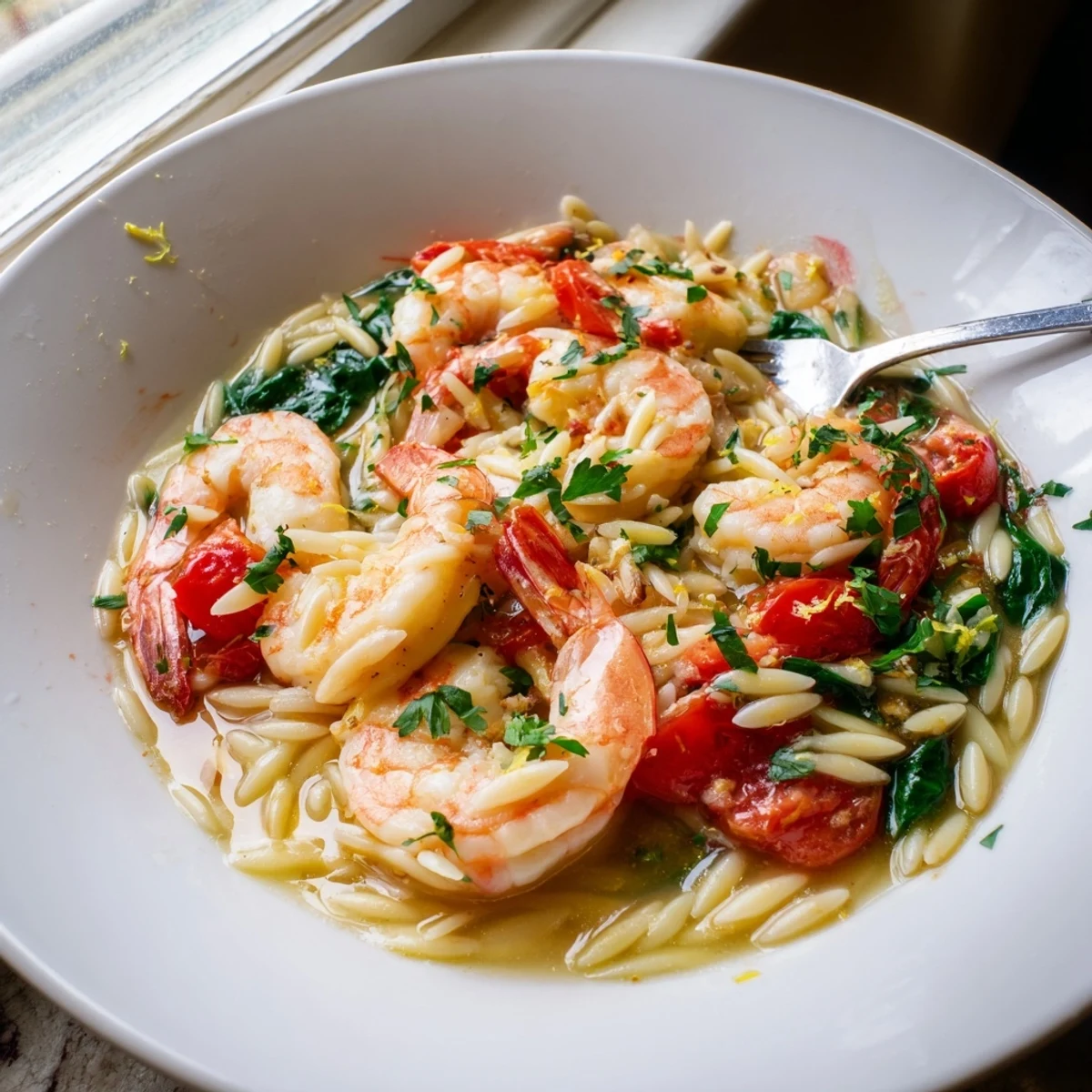
Save This Mediterranean-inspired skillet combines tender shrimp with perfectly cooked orzo in a bright lemon broth. The one-pan method infuses the pasta with savory flavors while cherry tomatoes and spinach add freshness and color. Ready in just 30 minutes, this dish balances tangy citrus with aromatic garlic and herbs for a satisfying meal that feels elegant yet effortless.
The sizzle of shrimp hitting a hot skillet on a Tuesday evening is one of those small kitchen sounds that instantly makes a house feel like home. I threw this together one night when the fridge offered nothing but a bag of spinach, some lingering lemons, and a box of orzo I had been ignoring for months. What came out of that pan was bright, briny, and comforting enough to make me put down my phone and actually taste my dinner. It has been in steady rotation ever since.
I made this for my neighbor Elena after she had a particularly brutal week at work and she stood in my kitchen eating straight from the pan with a wooden spoon before we even made it to the table.
Ingredients
- 1 lb (450 g) large shrimp, peeled and deveined: Fresh or frozen both work, but if you use frozen, thaw them under cold running water and pat them thoroughly dry so they sear instead of steam.
- 1 medium yellow onion, finely chopped: Yellow onion gives a mellow sweetness that balances the sharp lemon without fighting it.
- 2 garlic cloves, minced: Fresh garlic only here, the jarred stuff loses too much punch for a dish this simple.
- 1 cup cherry tomatoes, halved: They burst during cooking and create little pockets of sweetness scattered through the orzo.
- 2 cups baby spinach: It wilts down almost to nothing, so do not be alarmed by the volume going into the pan.
- 1 cup (180 g) orzo pasta: Toasting it briefly in the aromatics before adding liquid gives it a nutty depth that plain boiled orzo never achieves.
- 2 1/4 cups (540 ml) low sodium chicken or vegetable broth: Low sodium matters because reduction concentrates salt quickly.
- Juice and zest of 1 large lemon: Use every bit of it, the zest carries floral notes the juice alone cannot provide.
- 2 tbsp extra virgin olive oil: Split between cooking the shrimp and sauteing the aromatics.
- 1/2 tsp chili flakes (optional): Just enough warmth to notice, not enough to overpower.
- 1/2 tsp smoked paprika: This is the quiet ingredient that makes people ask what your secret is.
- Salt and freshly ground black pepper: Season in layers, once on the shrimp and again at the end.
- 1/4 cup fresh parsley, chopped: Added off the heat so it stays bright and grassy.
- Lemon wedges: A final squeeze at the table wakes up every flavor on the plate.
Instructions
- Sear the shrimp:
- Heat 1 tablespoon of olive oil in a large deep skillet over medium high heat, pat the shrimp dry and season with salt, pepper, and smoked paprika, then cook 2 to 3 minutes per side until they curl and turn pink but still have a slight give when pressed. Pull them out and set aside on a plate.
- Build the flavor base:
- Add the remaining olive oil to the same skillet and cook the onion for 2 to 3 minutes until it turns translucent and softens at the edges, then stir in the garlic and chili flakes for about 30 seconds just until the smell hits you.
- Toast the orzo:
- Pour the dry orzo into the pan and stir it through the onion and garlic for 1 to 2 minutes so each grain gets slicked with oil and takes on a faint golden color.
- Simmer everything together:
- Pour in the broth along with the lemon juice and zest, scrape up anything stuck to the bottom of the pan, bring it to a boil, then drop the heat and let it simmer uncovered for 7 to 10 minutes, stirring now and then, until the orzo is tender and the liquid has thickened into a glossy sauce.
- Add the vegetables:
- Stir in the cherry tomatoes and spinach and let them cook for 1 to 2 minutes until the spinach has collapsed and the tomatoes have softened just enough to release some juice.
- Bring it all home:
- Return the shrimp to the skillet and let everything cook together for 2 more minutes so the shrimp warm through and the flavors marry, then taste and adjust the salt and pepper.
- Finish and serve:
- Take the pan off the heat, scatter the parsley over the top, and serve directly from the skillet with lemon wedges on the side.
 Save
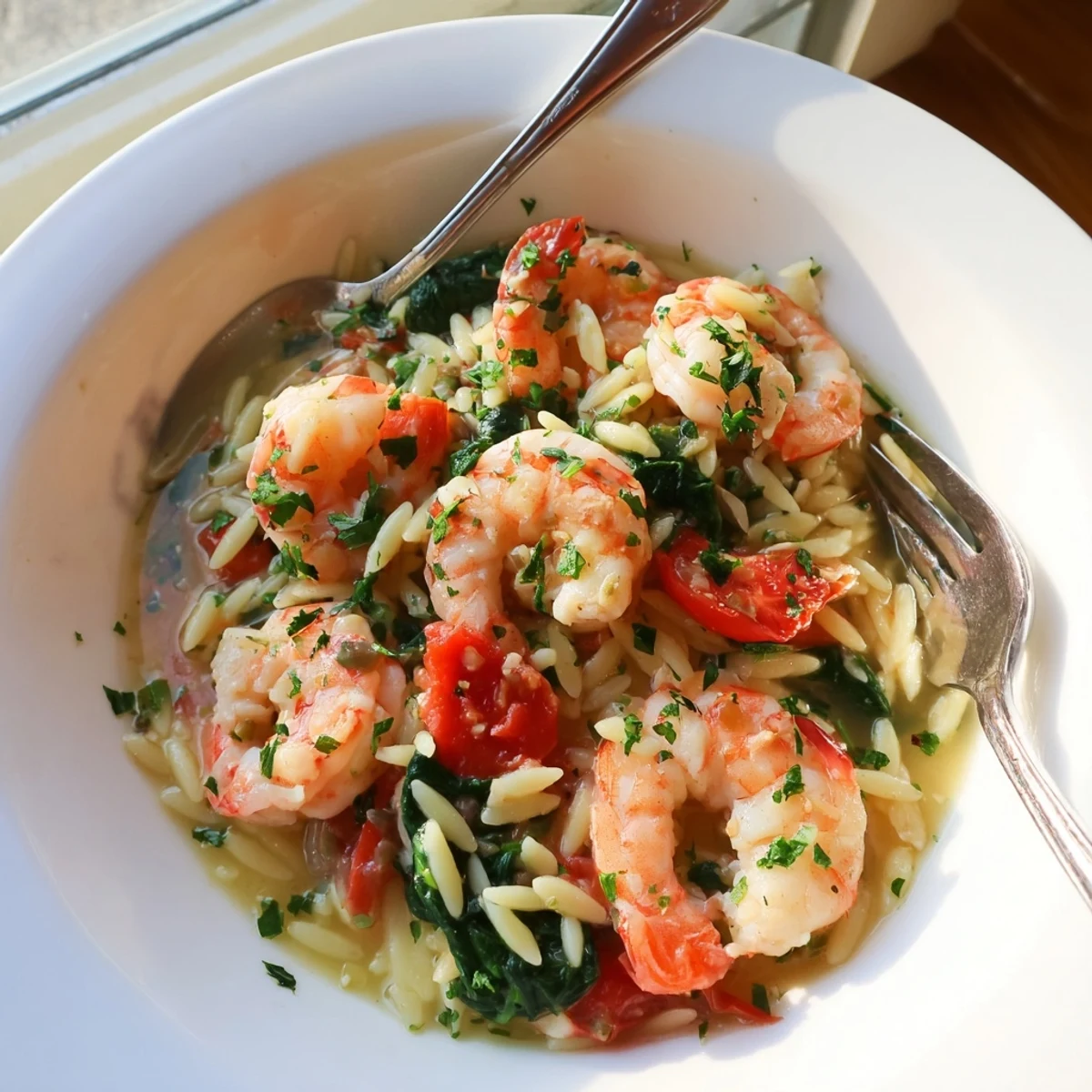
Save There is something about serving dinner directly from a single skillet that makes everyone at the table lean in a little closer and reach for seconds before the first round is even finished.
Getting the Texture Right
The trick to this dish not turning into a starchy puddle is watching the liquid carefully during the simmer. You want a silky consistency that coats the back of a spoon, not something thick like a stew and not something brothy like soup. If it looks too loose after ten minutes, let it go another minute or two. If it looks dry, add a splash of water or broth.
Wine Pairing Thoughts
A cold glass of Sauvignon Blanc or Pinot Grigio alongside this skillet is honestly hard to beat. The crisp acidity in those wines mirrors the lemon in the dish and keeps everything feeling fresh. I have also poured a light ros on warm evenings and never regretted it.
Making It Your Own
This recipe bends easily to whatever you have on hand, which is part of why it has become a standby in my kitchen. A handful of arugula works beautifully in place of spinach if you want more peppery bite. Stirring in a tablespoon of cold butter right at the end turns the sauce luxuriously rich.
- Try diced bell pepper with the onion for extra sweetness and color.
- A pinch of saffron in the broth transforms it into something that tastes like a seaside cafe.
- Always check pasta and broth labels if you are cooking for someone with gluten sensitivity.
 Save
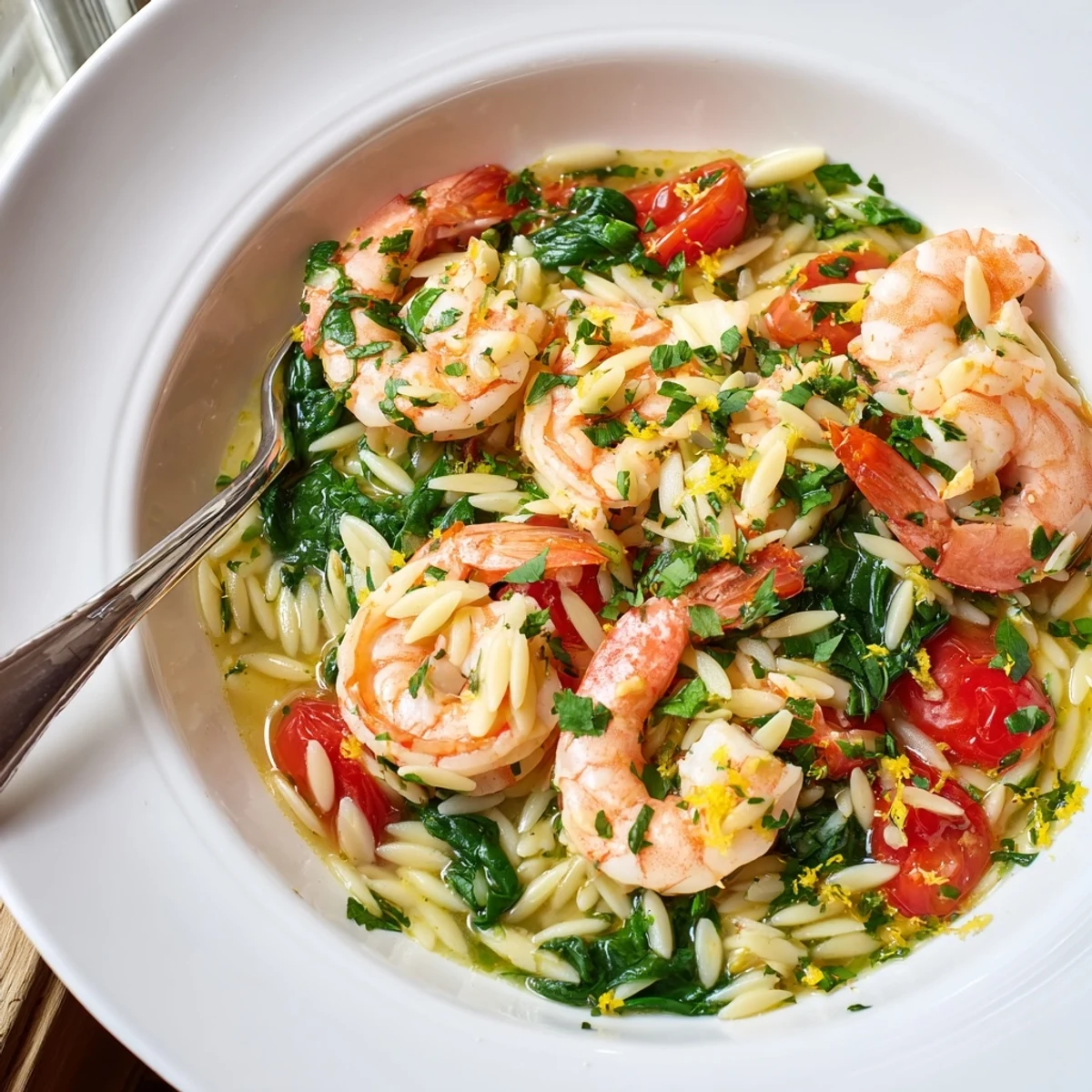
Save Keep this one close, because the night you are too tired to cook but still want something that feels like real food, this skillet will be waiting.
Recipe FAQs
- → Can I use a different type of pasta instead of orzo?
-
Yes, you can substitute orzo with small pasta shapes like ditalini, small shells, or even broken spaghetti pieces. Adjust cooking time accordingly and add more broth if needed since different pasta shapes absorb liquid differently.
- → How do I prevent the shrimp from becoming rubbery?
-
Avoid overcooking the shrimp by removing them from the pan as soon as they turn pink, about 2-3 minutes per side. They'll finish cooking when returned to the skillet at the end. Pat them dry before seasoning and don't crowd the pan to ensure proper searing.
- → Can I make this dish ahead of time?
-
While best enjoyed fresh, you can prepare components ahead. Chop vegetables and season shrimp up to a day in advance. The cooked dish keeps well in the refrigerator for 2-3 days, though the pasta will absorb more liquid over time—add a splash of broth when reheating.
- → What can I substitute for the broth?
-
You can use water with extra seasoning, though broth provides more depth. Vegetable broth keeps it pescatarian, while chicken broth adds richness. For a lighter version, use half broth and half water, increasing the lemon juice and herbs to maintain flavor.
- → Is this suitable for meal prep?
-
Absolutely. Portion the cooled dish into airtight containers and refrigerate for up to 3 days. The flavors meld beautifully overnight. Reheat gently with a splash of water or broth to refresh the texture. Avoid freezing as the pasta and shrimp may become mushy upon thawing.