
 Save
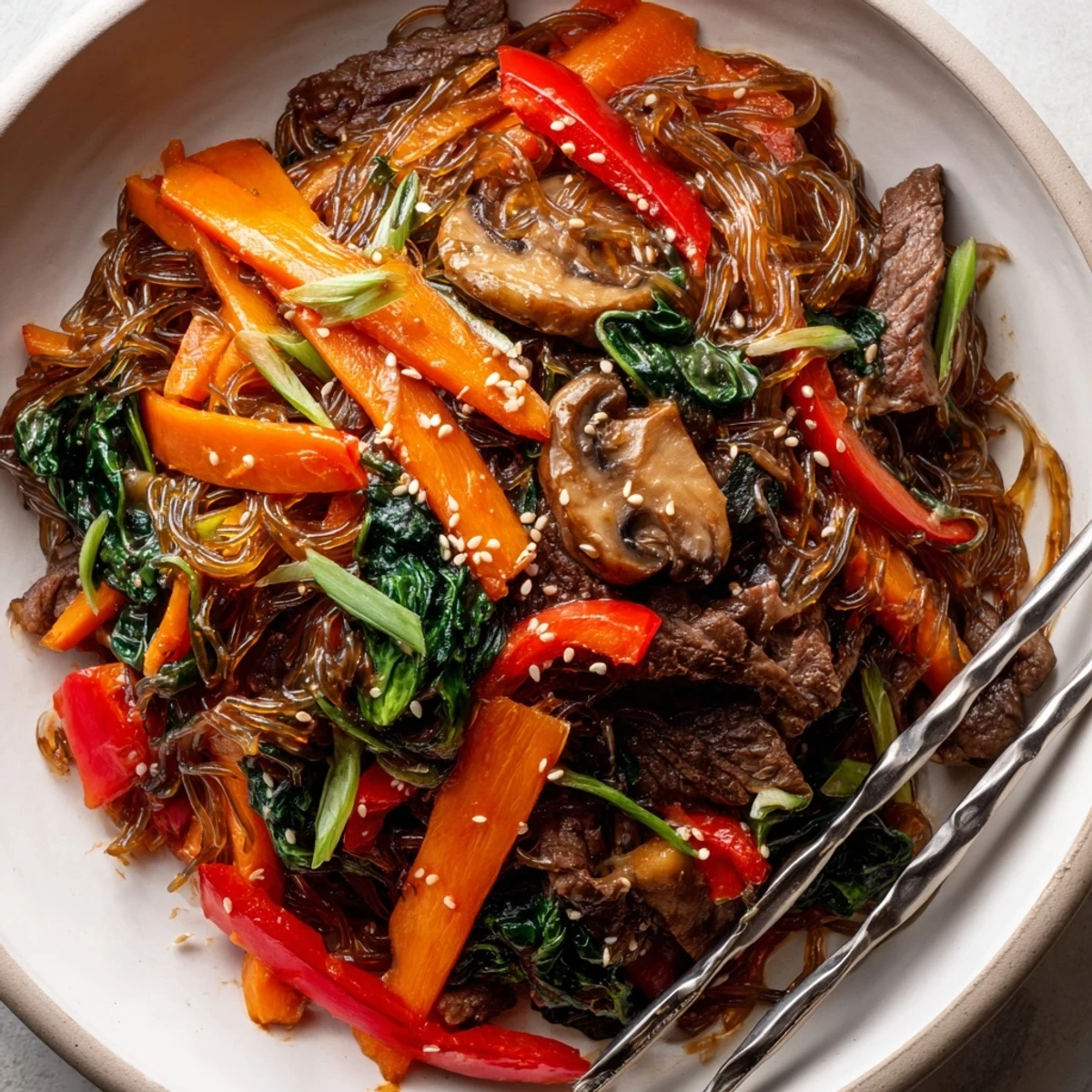
Save Experience the perfect balance of tender beef, springy sweet potato glass noodles, and vibrant vegetables in a rich, savory Korean-inspired sauce. The mildly spicy gochujang-based glaze creates an addictive depth of flavor that coats every strand. Ready in just 45 minutes, this dish brings restaurant-quality Korean flavors to your home kitchen with simple stir-fry techniques.
The first time I made Korean beef noodles, my tiny apartment smelled like Seoul street food and my roommate wandered in asking what restaurant Id ordered from. I remember feeling ridiculously proud as I slid that steaming bowl across the counter, watching her eyes widen at the tangle of chewy noodles and tender beef. She still asks me to make it whenever winter rolls around, claiming nothing else warms her up quite the same way.
Last February, my sister came over after a terrible day at work and I almost ordered takeout before remembering I had flank steak in the fridge. We stood at the stove together while I taught her how to julienne carrots, and something about the rhythm of stir-frying and the way the kitchen filled with that garlic-ginger aroma just shifted everything. She ate two bowls and told me it was the first time all day she felt okay again.
Ingredients
- 400 g (14 oz) flank steak or sirloin, thinly sliced: Flank steak has the perfect texture for quick stir-frying and absorbs that marinade beautifully
- 1 tbsp soy sauce: This starts tenderizing the beef immediately and builds layers of savory depth
- 1 tbsp cornstarch: Creates that silky protective coating that keeps the beef juicy during high-heat cooking
- 1 tsp sesame oil: A tiny amount goes such a long way in adding that nutty richness
- 300 g (10 oz) Korean sweet potato glass noodles (dangmyeon) or rice noodles: These springy, slightly translucent noodles are what make this dish feel authentic
- 2 tbsp vegetable oil: Split between two rounds of cooking, this prevents everything from sticking
- 1 medium carrot, julienned: Adds such lovely crunch and sweetness that balances the heat
- 1 red bell pepper, thinly sliced: Brings vibrant color and a subtle fruity note
- 1 cup shiitake mushrooms, sliced: Earthy and meaty, they amplify the umami in every bite
- 3 scallions, sliced: Use both the white and green parts for different layers of flavor
- 2 cups baby spinach: Wilts down beautifully and adds fresh color without being overpowering
- 4 tbsp soy sauce: The backbone of our sauce, providing that deep savory base
- 2 tbsp brown sugar: Cuts through the saltiness and creates that gorgeous caramelized glaze
- 1 tbsp gochujang (Korean chili paste): Fermented chili paste brings complex heat and depth
- 2 tbsp mirin or rice wine: Adds subtle sweetness and helps balance all the bold flavors
- 2 tsp sesame oil: Finishes the sauce with that unmistakable Korean aroma
- 2 cloves garlic, minced: Fresh garlic is non-negotiable here for authentic flavor
- 1 tsp freshly grated ginger: Brightens everything and cuts through the richness
- 1 tbsp water: Just enough to help everything come together into a cohesive sauce
- 1 tbsp toasted sesame seeds: That final crunch that makes restaurant dishes look so tempting
- Extra sliced scallions: Fresh garnish adds a pop of color and mild onion flavor
Instructions
- Prep the beef:
- Toss your thinly sliced steak with soy sauce, cornstarch, and sesame oil in a bowl, then let it hang out while you chop everything else.
- Cook the noodles:
- Boil your glass noodles according to the package, drain them, and give them a quick rinse under cold water to stop the cooking.
- Whisk the sauce:
- Combine all your sauce ingredients in a small bowl and whisk until the brown sugar dissolves completely.
- Sear the beef:
- Heat half your oil in a wok over high heat, add the beef in a single layer, and stir-fry for 2-3 minutes until just cooked through.
- Cook the vegetables:
- Add the remaining oil to the pan and stir-fry your carrots, peppers, and mushrooms until theyre tender but still have some bite.
- Bring it all together:
- Return the beef to the pan, add your noodles, spinach, and that gorgeous sauce, then toss everything for 2-3 minutes until the spinach wilts and everything is coated.
- Finish and serve:
- Pile everything into bowls and shower with sesame seeds and fresh scallions while its still piping hot.
 Save
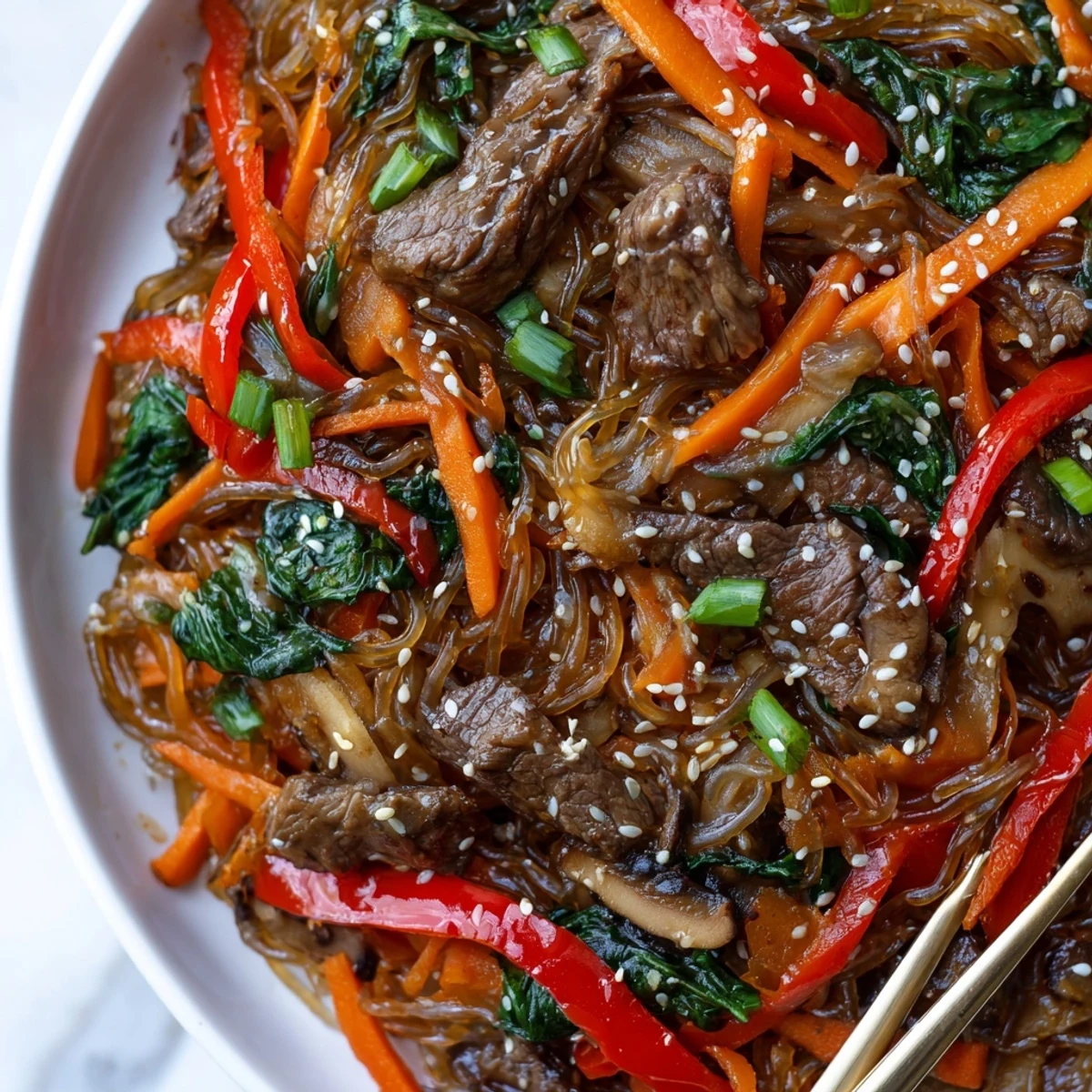
Save My mom called me mid-stir-fry once when I was making this, laughing because she could hear the wok sizzling through the phone. She said that sound reminded her of all the Korean restaurants we used to visit when I was little, and suddenly I was eight years old again, watching steam rise off giant bowls of japchae while my mom taught me how to use chopsticks.
Make It Your Own
After making this recipe a dozen times, I started playing around with different proteins and discovered that thinly sliced chicken breast works beautifully. Once I used leftover rotisserie chicken when I was short on time and honestly, it was still fantastic. My vegetarian sister swapped the beef for extra-firm tofu and loaded up on more mushrooms, and she said it was just as satisfying.
Noodle Swaps
Sometimes I cant find glass noodles at my regular grocery store, so Ive learned that thick rice noodles are a totally acceptable substitute. Udon noodles work too, though theyll change the texture a bit. Just remember that different noodles have different cooking times, so keep an eye on them so they dont turn to mush.
Sauce Adjustments
The first time I made this for my spice-averse kids, I cut the gochujang in half and they happily devoured it. On the flip side, when my heat-loving brother came over, I doubled it and added a teaspoon of chili flakes.
- Taste your sauce before adding it to the pan—everyone has different salt and heat tolerance
- If the sauce seems too thick after whisking, add another teaspoon of water
- Leftover sauce keeps in the fridge for a week and is amazing on plain rice
 Save
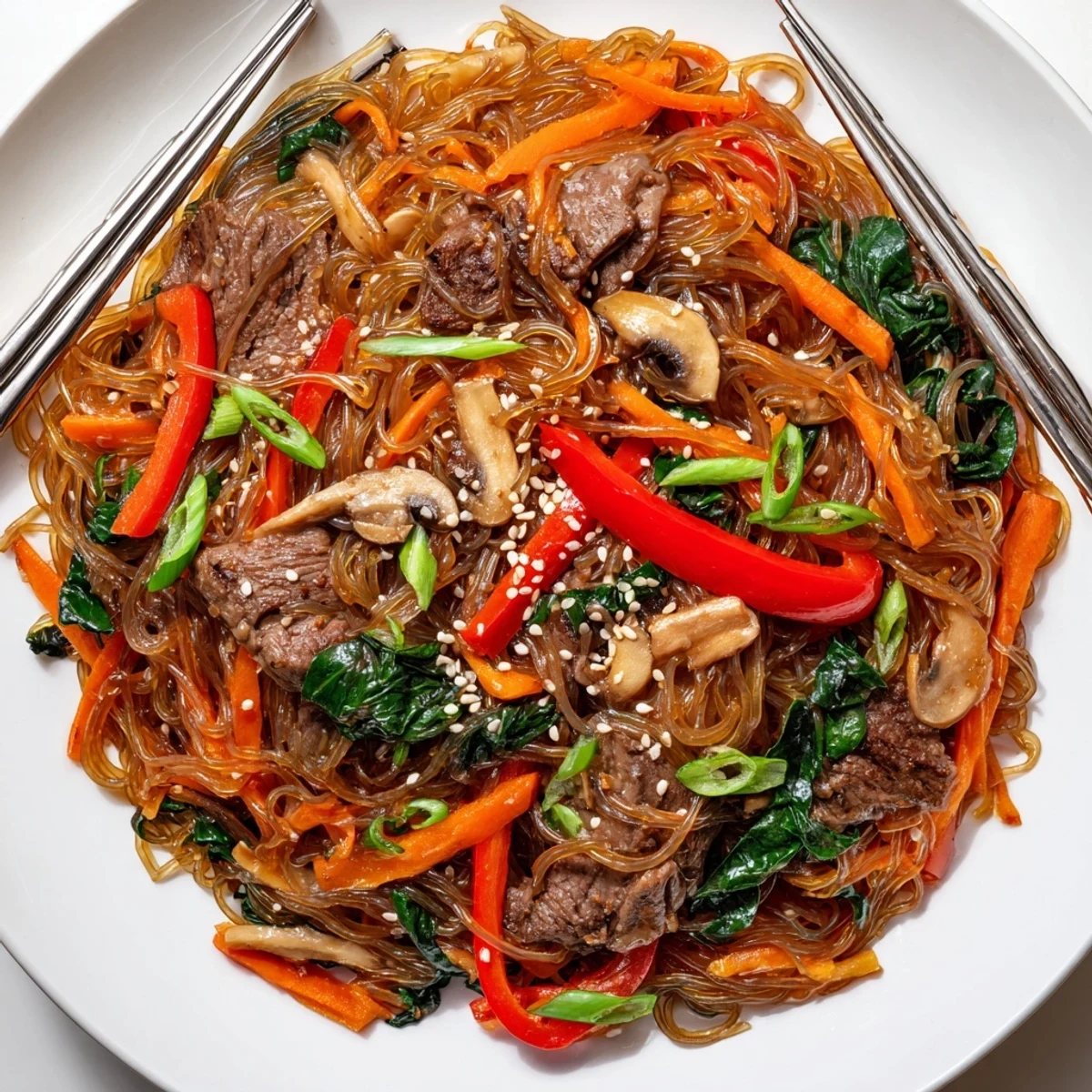
Save Theres something so grounding about standing at the stove, tossing noodles in a hot pan while the sauce bubbles up and coats everything in glossy perfection. I hope this recipe finds its way into your regular rotation, bringing warmth and comfort to your table too.
Recipe FAQs
- → What type of noodles work best for Korean beef noodles?
-
Korean sweet potato glass noodles (dangmyeon) are traditional, offering a delightfully chewy, springy texture. Rice noodles make an excellent gluten-free alternative, while udon or even spaghetti can work in a pinch.
- → Can I make this dish spicy?
-
Absolutely! Increase the gochujang quantity or add red pepper flakes to amp up the heat. The base recipe delivers gentle warmth, perfect for families, but easily customizable for spice enthusiasts.
- → What beef cuts are suitable for stir-frying?
-
Flank steak and sirloin are ideal—lean, flavorful, and quick-cooking. Slice thinly against the grain for maximum tenderness. Partially freezing the beef for 20 minutes makes cutting easier and more uniform.
- → How do I prevent noodles from becoming mushy?
-
Rinse cooked noodles under cold water immediately after draining to stop cooking and remove excess starch. This preserves their springy texture and prevents them from clumping or becoming gummy when stir-fried.
- → Can I prepare components ahead?
-
Slice vegetables and beef in advance, storing separately. The sauce whisked ahead develops deeper flavors. However, cook everything fresh for the best texture—reheated noodles tend to lose their delightful bounce.