
 Save
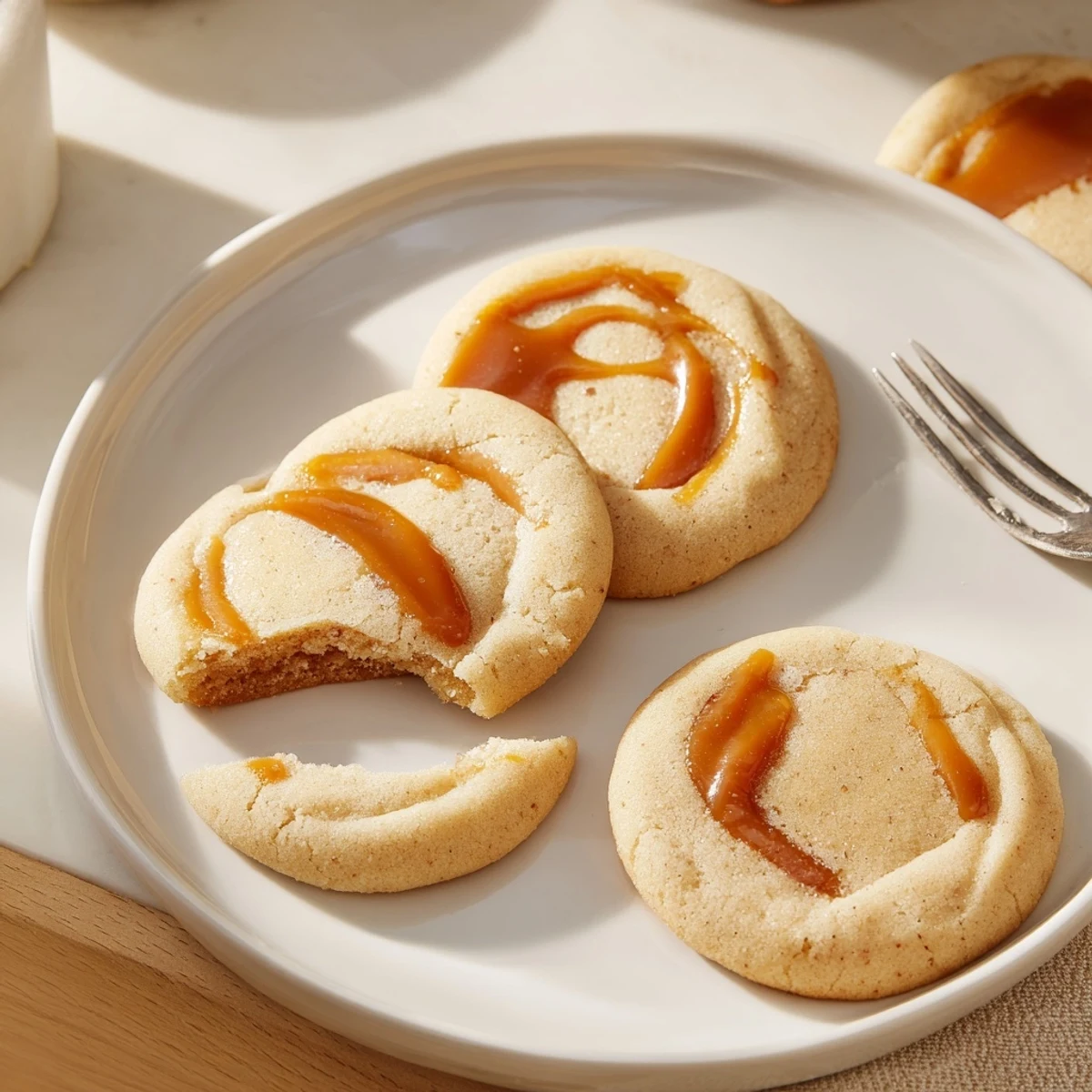
Save These caramel cheesecake cookies combine a buttery cream cheese dough with ribbons of golden caramel swirled throughout. The dough comes together quickly with basic pantry staples — softened butter, cream cheese, sugar, egg, and vanilla — then chills for 30 minutes before scooping and baking.
Each cookie gets a small pool of caramel sauce pressed into an indent, then swirled with a knife for a marbled finish. Bake at 350°F for 11–13 minutes until edges turn lightly golden. A sprinkle of flaky sea salt before baking adds a salted caramel dimension.
Yielding two dozen cookies, they're ideal for dessert platters, holiday cookie trays, or an afternoon sweet alongside coffee.
The rain was hammering against my kitchen window the afternoon I stumbled into these cookies, half frustrated by a failed cheesecake and half desperate to use up a jar of caramel sauce I had impulse bought at the farmers market. I scooped up the cream cheese, grabbed butter straight from the counter, and decided to mash my dessert dreams into something faster and far less fussy than a springform pan situation. What came out of the oven twelve minutes later made me laugh out loud, golden little puffs with gooey caramel pools that tasted like someone crossed a cheesecake with a hug. I burned my tongue on the first one and did not care even a little.
I brought a full plate to my neighbors holiday potluck last December and watched three people abandon their conversations mid sentence to grab a second cookie before the tray disappeared. My friend David, who claims he has no sweet tooth, quietly ate five of them standing by the dip table and then asked if I could teach his wife the recipe. That plate was empty in under ten minutes, and I had to promise I would make them again before New Years.
Ingredients
- Unsalted butter (1/2 cup, softened): You really need it at true room temperature here, not microwaved into a puddle, because the texture of the whole dough depends on it creaming properly with the cream cheese.
- Cream cheese (4 oz, softened): Full fat is nonnegotiable for the right tang and richness, and make sure there are no cold lumps hiding in it when you start mixing.
- Granulated sugar (1 cup): This sweetens both the cookie base and balances the slight tang from the cream cheese beautifully.
- Large egg (1): Binds everything together and adds a tender chew to the final cookie.
- Vanilla extract (1 tsp): Use the real stuff if you can, it makes a quiet but real difference in such a simple dough.
- All-purpose flour (2 cups): Spoon and level it gently, because packed flour will turn these into sad little hockey pucks.
- Baking powder (1/2 tsp): Just enough lift to keep them soft without turning them cakey.
- Salt (1/4 tsp): A small pinch that wakes up every other flavor in the dough.
- Caramel sauce (1/2 cup, slightly cooled): Store bought works perfectly, but if yours is very runny, pop it in the fridge for ten minutes so it does not flood everywhere when you swirl.
Instructions
- Beat the butter and cream cheese together:
- Use an electric mixer on medium speed until the mixture is completely smooth with no streaks, about two minutes. You want it looking like the softest cloud you have ever seen.
- Add sugar and beat fluffy:
- Pour in the sugar and keep beating until the mixture turns pale and noticeably lighter in texture, scraping down the bowl once or twice so nothing hides at the bottom.
- Mix in egg and vanilla:
- Drop in the egg and vanilla together and beat just until everything is evenly combined and the batter looks silky. Stop mixing once you see no streaks of egg.
- Combine dry ingredients into wet:
- Whisk flour, baking powder, and salt in a separate bowl, then add it gradually to the wet mixture on low speed. Mix only until the last streak of flour disappears, because overmixing makes them tough.
- Chill the dough:
- Cover the bowl tightly and tuck it into the refrigerator for at least thirty minutes so the dough firms up enough to scoop without spreading into flat pancakes.
- Preheat and prep pans:
- Set your oven to 350 degrees F and line two baking sheets with parchment paper while the dough finishes chilling. The parchment saves you from the heartbreak of caramel sticking to the pan.
- Scoop and shape cookies:
- Scoop heaping tablespoons of dough onto the sheets, leaving about two inches of space between each one for spreading. Use the back of your spoon to press a gentle dent into the center of every cookie.
- Add the caramel swirl:
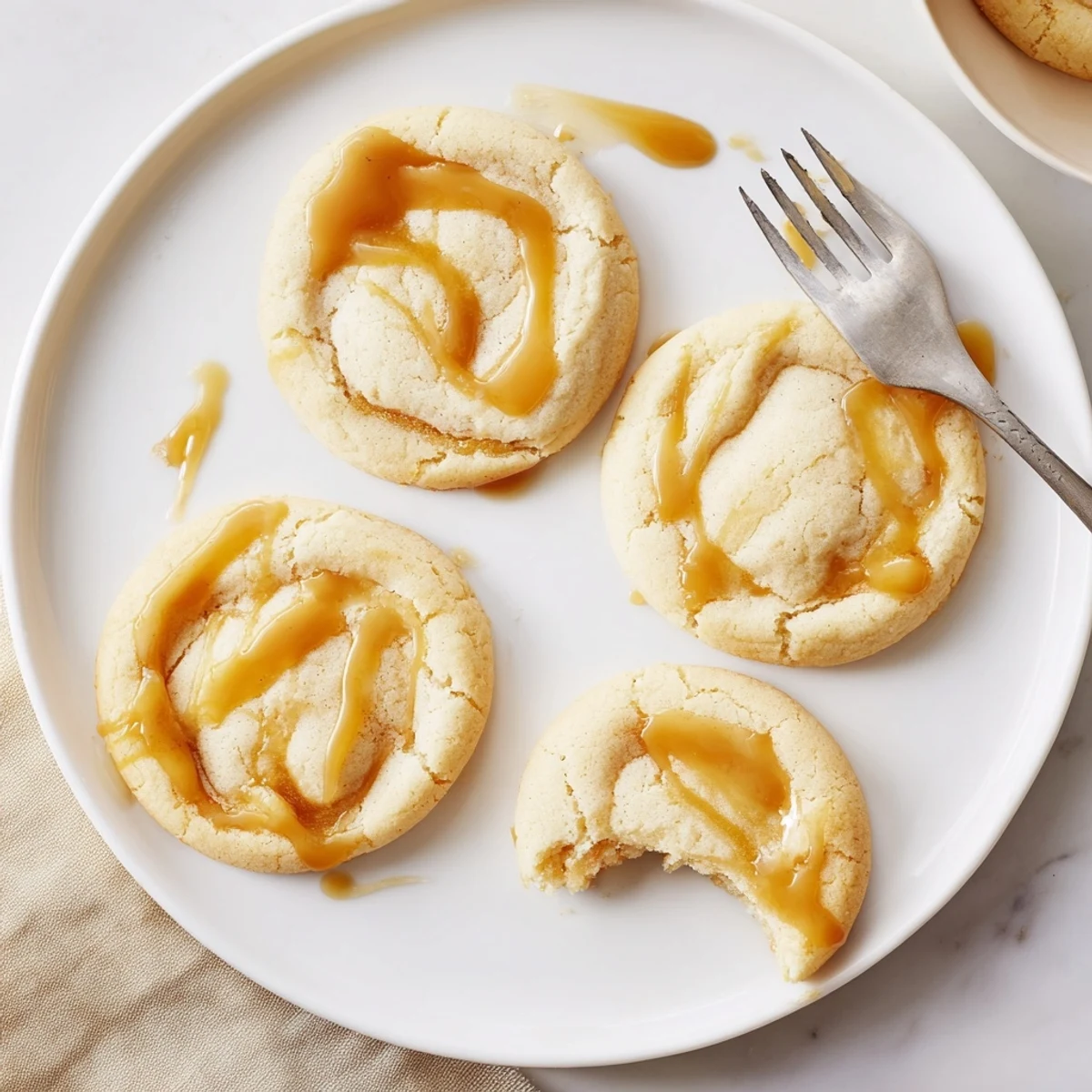
- Dollop roughly half a teaspoon of caramel into each indent, then drag a toothpick or knife tip through it in a loose figure eight to create a pretty swirl. Try not to overwork it or the caramel sinks straight to the bottom.
- Bake until golden at edges:
- Slide the trays into the oven and bake eleven to thirteen minutes until the edges are just turning golden but the centers still look slightly underdone and soft. They will set up as they cool.
- Cool completely:
- Let the cookies rest on the baking sheet for five full minutes before moving them to a wire rack, because they are fragile little things right out of the oven and need that time to find their strength.
 Save
Save There is something quietly wonderful about watching a tray of these cool on the counter, the caramel setting into little golden pools in the center of each puffed cookie, knowing you are about to make someone extremely happy with almost no effort.
When to Make Them
These are my go-to when I need a dessert that feels special but I have zero patience for rolling crusts or tempering chocolate. They shine on holiday cookie trays, at bake sales where you want people to fight over the last one, or honestly on a random Tuesday when the craving hits and you deserve a treat.
Flavor Variations Worth Trying
Sometimes I swap the caramel for a spoonful of raspberry jam and a tiny pinch of lemon zest, and suddenly they taste completely different but just as good. Chocolate ganache works beautifully too if you want to lean fully into indulgence. The dough itself is a blank canvas that plays well with almost anything sweet you want to swirl in.
Storage and Make Ahead Tips
These keep beautifully in an airtight container at room temperature for up to four days, though honestly they rarely last that long in my house. You can freeze the baked cookies for up to two months by layering them between sheets of parchment in a freezer bag. The dough also freezes well if you want to scoop and indent the cookies ahead of time, then thaw and add caramel before baking.
- Always separate layers of baked cookies with parchment so the caramel tops do not stick together.
- If frozen dough feels too soft after thawing, pop it back in the fridge for fifteen minutes before adding caramel and baking.
- Remember to sprinkle flaky sea salt on top before baking if you want that salted caramel bakery style finish.
 Save
Save Make a batch, share them generously, and watch faces light up when people bite into that creamy cheesecake cookie with its sweet caramel heart. These little cookies have a way of turning an ordinary afternoon into something worth remembering.
Recipe FAQs
- → Can I use homemade caramel sauce instead of store-bought?
-
Absolutely. Homemade caramel sauce works beautifully and often delivers a richer, deeper flavor. Let it cool slightly before swirling into the cookies so it doesn't melt the dough. You can also melt soft caramels with a splash of heavy cream for a quick shortcut.
- → Why does the dough need to chill before baking?
-
Chilling firms up the butter and cream cheese in the dough, which prevents excessive spreading during baking. This helps the cookies hold their shape and maintain a thick, soft texture. Thirty minutes is the minimum, but you can chill it up to overnight.
- → How should I store leftover caramel cheesecake cookies?
-
Store cooled cookies in an airtight container at room temperature for up to 3 days. For longer storage, refrigerate them for up to a week. You can also freeze baked cookies for up to 2 months — just thaw at room temperature before serving.
- → Can I add other flavors or mix-ins to this dough?
-
Yes, the base dough is quite versatile. Try folding in chocolate chips, toffee bits, or chopped pecans. You can also swap the caramel swirl for chocolate ganache, fruit preserves, or Nutella for a completely different flavor profile.
- → What's the best way to get a clean caramel swirl?
-
Use the back of a spoon or a small cookie scoop to press a shallow indent into each dough ball. Spoon about half a teaspoon of slightly cooled caramel into the center, then drag a toothpick or butter knife through it in a gentle circular motion. Avoid over-mixing or the caramel will disappear into the dough.
- → Can I freeze the cookie dough for later use?
-
Yes, portion the dough into scooped balls and freeze them on a parchment-lined tray until solid. Transfer to a freezer bag and store for up to 3 months. When ready to bake, add the caramel swirl and bake directly from frozen, adding 1–2 extra minutes to the baking time.